

Monomaterial Plastic Packaging: Why It Matters for Sustainable Packaging
A practical guide to recyclability, PPWR readiness, material selection, and all-plastic dispensing systems for cosmetics, personal care, and household products.
Monomaterial plastic packaging is moving from a specialist sustainability concept to a practical design strategy for brands that need packaging to perform, look good, and fit emerging circular-economy rules. The shift is especially relevant to cosmetics, personal care, and household products, where a bottle and its dispensing system can contain several different materials.
By designing the main pack and compatible components around one polymer family—typically polyethylene (PE) or polypropylene (PP)—manufacturers can simplify sorting and recycling while maintaining the functionality required by the product. The result is packaging that is easier to evaluate for recyclability and better positioned for future market requirements.
Key takeaways
- Monomaterial packaging uses one dominant polymer family to make sorting and recycling more straightforward.
- A monomaterial design is not automatically recyclable; the complete pack, local infrastructure, and design details still matter.
- PPWR is accelerating design-for-recycling work for packaging sold in the EU, with recyclability requirements taking effect in stages.
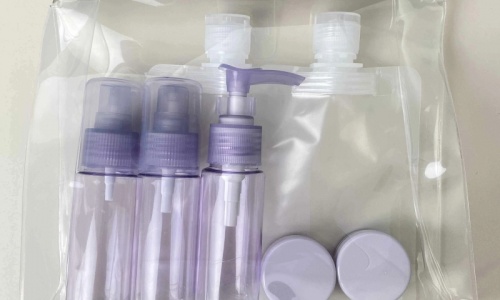
- All-plastic droppers, trigger sprayers, fine mist sprayers, lotion pumps, and PE bottles can support a more compatible packaging system.
What Is Monomaterial Plastic Packaging?
Monomaterial plastic packaging is made mainly from one polymer family. A package can still include several physical components or functional layers, but those elements should be compatible with the same recycling stream. Common examples include an all-PE bottle system or a PP-based closure and dispensing solution.
This approach differs from conventional multi-material packaging, which may combine plastics, metal springs, elastomers, aluminium, or barrier layers that are difficult to separate. Reducing incompatible materials can improve the pack’s chances of being correctly sorted and mechanically recycled.
However, “monomaterial” should not be treated as an automatic recycling claim. Labels, colourants, inks, adhesives, barrier coatings, residual product, component size, and regional recycling systems can all affect the real-world outcome. The complete pack—not only the bottle—must be assessed.

Why Monomaterial Packaging Matters
1. Easier sorting and recycling
A package built around one dominant polymer is generally easier for sorting equipment and recyclers to identify. When incompatible materials are minimized, the recycling process can achieve better yields and produce more consistent recyclate for future applications.
2. Better potential for high-quality recycled material
Mixed materials can contaminate a recycling stream or reduce the quality of the resulting resin. A well-designed mono-PE or mono-PP structure helps preserve material value, although the final quality still depends on collection, sorting, washing, and reprocessing conditions.
3. A more practical route to circular packaging
Designing for compatibility gives brands a clearer route from packaging specification to end-of-life planning. It can also make supplier discussions more focused because the bottle, closure, dip tube, gasket, label, and decoration are evaluated as one system rather than as isolated parts.
4. Potential for lower environmental impact
Improved recyclability can help divert suitable material from landfill or incineration and reduce demand for virgin resin. The actual environmental benefit varies by pack format, product protection needs, transport, recycled-content use, and local recycling performance, so life-cycle claims should be supported by evidence.
Business Benefits for Brands and Packaging Buyers
PPWR readiness and EU market access
The EU Packaging and Packaging Waste Regulation (PPWR), Regulation (EU) 2025/40, entered into force on 11 February 2025 and generally applies from 12 August 2026. The regulation introduces staged requirements intended to make packaging placed on the EU market recyclable, including design-for-recycling requirements from 2030. See the European Commission’s PPWR overview for the official timeline and implementation information.
Monomaterial design can support PPWR preparation, but it does not by itself prove compliance. Brands should confirm the rules that apply to their packaging category, market, format, labelling, recycled content, and extended producer responsibility obligations.
Simpler material and component management
Reducing the number of incompatible materials can simplify specifications, supplier communication, quality control, and future redesign work. It may also help packaging teams identify which functional components genuinely require a different material.
A stronger sustainability proposition
International buyers increasingly ask suppliers to explain material composition, recyclability, and regulatory readiness. A transparent monomaterial strategy gives sales and sustainability teams a more credible story—provided claims are specific, verifiable, and appropriate to the target market.
Mono-PE vs. Mono-PP: What Is the Difference?
PE and PP are both widely used polyolefins, but they offer different processing and performance characteristics. The right choice depends on the formula, dispensing method, package format, and recycling stream being targeted.
| Factor | Mono-PE system | Mono-PP system |
|---|---|---|
| Typical strengths | Flexibility, squeeze performance, chemical resistance | Stiffness, hinge performance, heat resistance |
| Common formats | Bottles, tubes, flexible packaging, selected closures | Closures, pumps, dispensers, jars, rigid packs |
| Key checks | Stress cracking, barrier needs, closure compatibility | Impact performance, sealing, actuator and spring design |
| Recycling design | Keep components compatible with the PE stream | Keep components compatible with the PP stream |
Note: This is a general comparison. Final material selection requires product-specific testing.
Where Monomaterial Packaging Is Used
Material innovation and better component engineering are expanding the range of applications. Current opportunities include:
- Cosmetics and skincare: serum, lotion, cleanser, toner, and treatment packaging
- Personal care: hand care, hair care, body care, and travel-size packaging
- Household products: cleaners and other formulas requiring trigger or spray dispensing
- Food and beverage: selected formats that meet food-contact, barrier, and shelf-life requirements
- Pharmaceutical and healthcare: applications subject to strict product and regulatory validation
- Industrial products: chemical-compatible bottles, closures, and dispensing systems
Not every application should be converted in the same way. Product protection, user safety, dosage accuracy, shelf life, and transport performance remain essential. Sustainability improvements should never compromise the package’s primary function.
AFS Packaging Solutions for Monomaterial Design
AFS Packaging works with B2B customers to develop plastic packaging systems for cosmetics, personal care, and household products. Our growing range of all-plastic and recyclable-design options includes:
- All-plastic droppers for serum and treatment packaging
- All-plastic trigger sprayers for household and personal care products
- All-plastic fine mist sprayers for lightweight liquid formulas
- All-plastic lotion pumps and dispensing closures
- PE bottles and compatible closures
- Custom colour, logo, decoration, and OEM/ODM development support

For each project, we review the complete packaging system and the intended market. This helps customers balance recyclability goals with formula compatibility, dosage performance, appearance, transport durability, and production efficiency.
How to Select the Right Monomaterial Packaging
A successful redesign starts with technical requirements, not with a material label. Use the following sequence when discussing a project with your packaging supplier:
- Define the product: Confirm formula, viscosity, pH, solvents, oils, surfactants, and filling temperature.
- Specify dispensing performance: Set the required dose, spray pattern, output, priming, lock function, and user experience.
- Choose the polymer family: Select PE, PP, or another suitable system based on compatibility, processing, and the intended recycling stream.
- Review every component: Check the bottle, closure, actuator, spring, gasket, dip tube, label, ink, adhesive, and barrier layer.
- Confirm decoration and branding: Choose colour and decoration that support sorting and recycling while meeting the brand brief.
- Test the complete pack: Validate compatibility, leakage, sealing, dosage, drop performance, transport, storage, and shelf life.
- Check market requirements: Verify food-contact, cosmetics, pharmaceutical, labelling, recyclability, EPR, and other rules for each destination market.
Frequently Asked Questions
What is monomaterial plastic packaging?
It is packaging designed primarily from one plastic polymer family, such as PE or PP. Components, layers, labels, inks, and adhesives should also be selected for compatibility with the intended recycling stream.
Is monomaterial packaging recyclable?
It is generally easier to sort and recycle than a comparable multi-material pack, but recyclability is not guaranteed. The final result depends on the complete packaging design and on local collection, sorting, and recycling infrastructure.
What is the difference between monomaterial and multilayer packaging?
Monomaterial packaging may still use several functional layers, provided they belong to the same compatible polymer family. Conventional multilayer packaging often combines different material families that can be difficult to separate during mechanical recycling.
Does monomaterial mean the packaging contains recycled plastic?
No. Monomaterial describes material compatibility and structure, while recycled content describes the source of the resin. A package may be monomaterial, contain recycled content, meet both conditions, or meet neither.
Which industries use monomaterial packaging?
Common applications include cosmetics, personal care, household chemicals, selected food packaging, pharmaceutical packaging, and industrial products. Material selection and testing must match the formula and the applicable market requirements.
How should a brand choose the right monomaterial packaging?
Start with the formula, viscosity, dispensing method, barrier needs, neck finish, decoration, transport conditions, and target market. Then test the complete pack for compatibility, sealing, dosage, leakage, and regulatory suitability before commercial production.
Plan Your Next Sustainable Packaging Project
Monomaterial plastic packaging can make recyclability goals more practical, but the best solution is always application-specific. Early collaboration between the brand, formula team, packaging manufacturer, component suppliers, and recyclability experts can prevent costly redesigns later.
Contact AFS Packaging to discuss all-plastic droppers, trigger sprayers, fine mist sprayers, lotion pumps, PE bottles, and custom monomaterial packaging development.
Sources and Further Reading
• European Commission — Packaging waste overview and PPWR timeline
• European Commission — Packaging and Packaging Waste Regulation overview
• CEFLEX — Designing for a Circular Economy: design principles
Regulatory note: This article provides general packaging information and is not legal advice. Requirements and recycling acceptance vary by market, packaging category, and local infrastructure.