

GOOGLE SEO BLOG PUBLICATION DRAFT
Color Changing Cups Types Uses and Buying Guide
A practical guide to heat activated cold activated and UV photochromic drinkware
English Edition · September 2026
Prepared for publication by Wuxi Afshan Packaging Co., Ltd.
Color-Changing Cups Explained Thermochromic vs Photochromic Cups
Color-changing cups alter their appearance when the temperature or lighting condition changes. A design may fade, deepen, switch from one color to another or reveal a hidden image. This interactive effect makes the cups popular for gifts, beverage service, events, children’s products and branded merchandise.
However, “color-changing cup” is not a single technology. Most products fall into three groups: heat-activated thermochromic cups, cold-activated thermochromic cups and UV-activated photochromic cups. Each group has different triggers, compatible materials, visual effects and durability considerations. A useful quotation request therefore needs more detail than simply asking for a color-changing cup.
Quick answer: Choose heat activation for hot drinks, cold activation for iced drinks and UV activation for sunlight interaction. Confirm the activation range, cup material, coating structure and use conditions before sampling.
1 What Is a Color-Changing Cup
A color-changing cup normally uses a functional pigment, ink, coating or decorative layer on the outside of a ceramic, plastic, stainless-steel or glass cup. When the coating reaches its designed temperature or receives enough ultraviolet light, its molecular or optical state changes and the visible color or transparency changes with it.
Most effects are reversible, so the original appearance returns when the trigger is removed. Reversible does not mean permanent, however. Washing, abrasion, excessive heat, strong UV exposure and chemical contact can gradually reduce the effect.
2 The Three Main Types of Color-Changing Cups
| Type | Trigger | Typical effect | Common use |
|---|---|---|---|
| Heat-activated thermochromic | Hot drink or rising cup-wall temperature | Dark-to-light change, hidden design reveal or color switch | Coffee mugs, gift mugs, promotional drinkware |
| Cold-activated thermochromic | Ice water or falling cup-wall temperature | Colorless-to-color or one-color-to-another change | Cold cups, beer cups, event drinkware |
| UV photochromic | Sunlight or a UV-containing light source | Pale or colorless indoors, colored outdoors | Outdoor cups, children’s cups, interactive promotions |
A 43°C heat trigger or a 10–18°C cold trigger is a common formulation example, not a universal specification. Always confirm the onset and full-change conditions against the supplier’s technical information and an approved physical sample.
3 Heat-Activated Thermochromic Cups
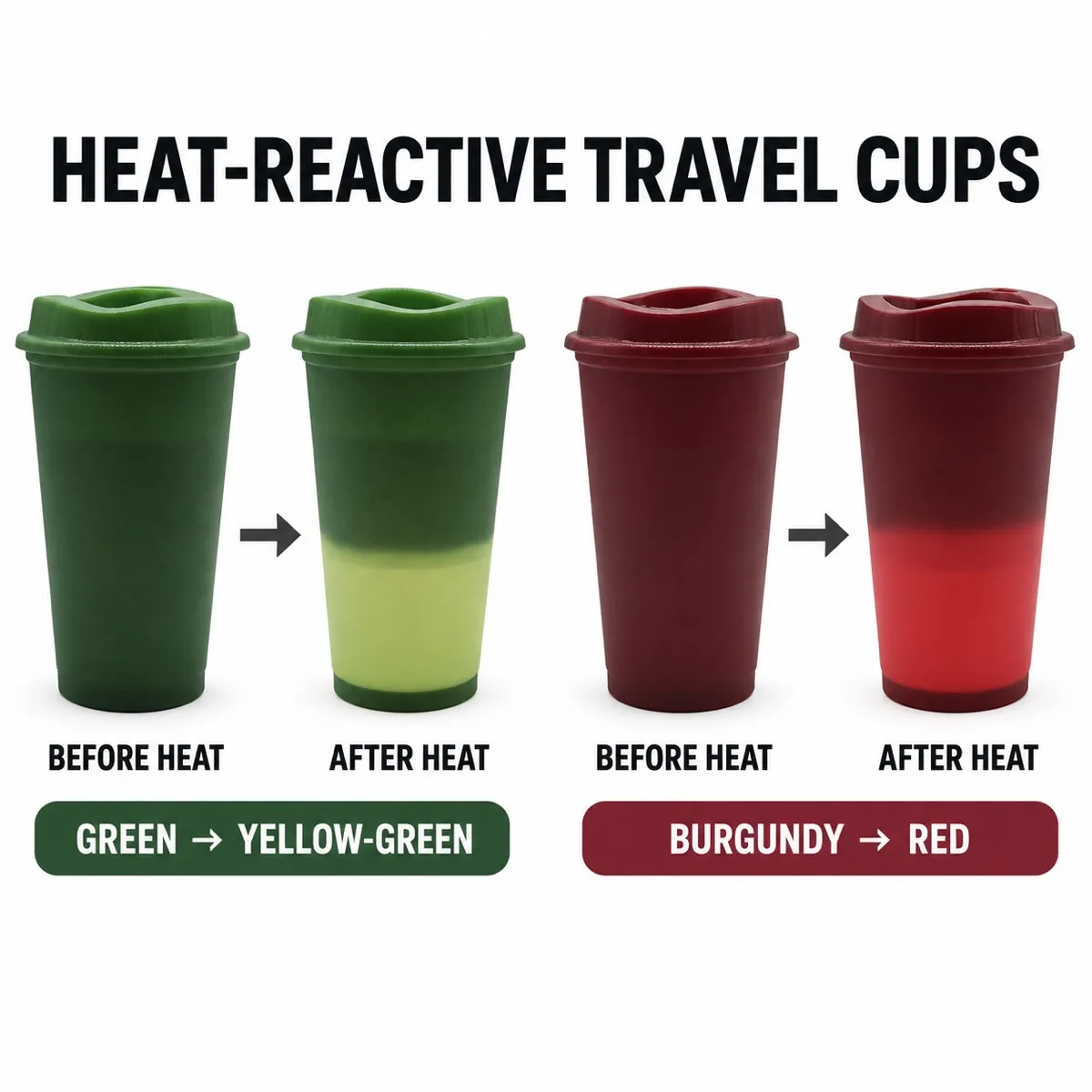
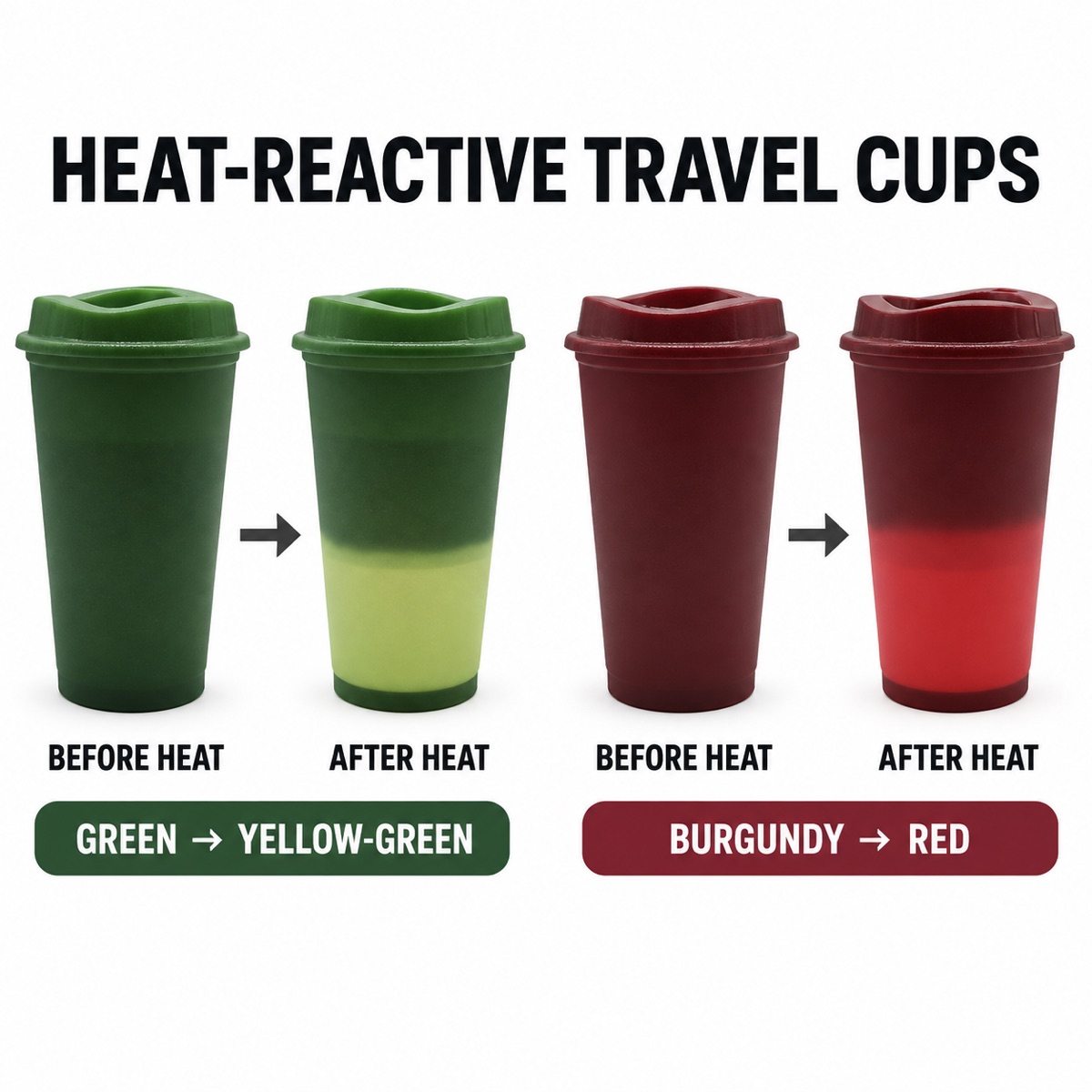
Heat-activated cups are also called heat-sensitive cups, thermochromic mugs or magic mugs. At room temperature the cup shows one appearance. After hot water, coffee, tea or another hot drink is added, the functional layer reaches its activation range and fades, changes color or reveals artwork beneath it. The original appearance normally returns as the cup cools.
Typical Activation Temperature
Some commercial systems begin to show a clear response at about 40–45°C, while lower- and higher-temperature formulations are also available. A purchasing specification should identify the onset temperature, full-change temperature and allowed tolerance instead of using the vague phrase “changes with heat.”
Best Applications
Magic mugs, coffee cups and commemorative gifts.
Hidden logos, messages, illustrations and reveal designs.
Interactive merchandise for foodservice, exhibitions and seasonal campaigns.
A visual cue that the cup wall has become warmer.
A thermochromic effect is only an approximate visual indicator. It is not a thermometer and should not be used to decide whether a drink is safe to consume.
4 Cold-Activated Color-Changing Cups
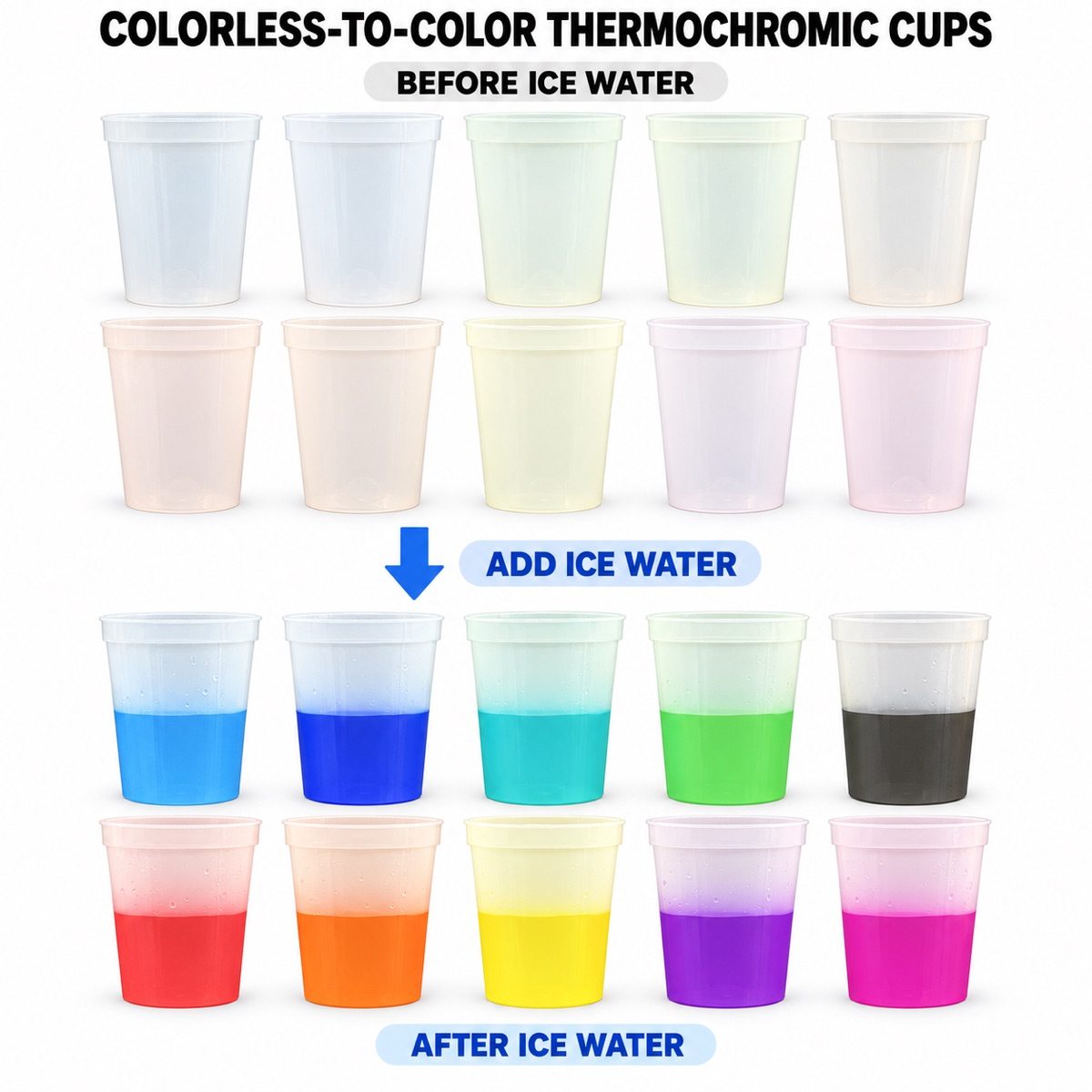
Cold-activated cups respond after ice water, soda, beer or another cold drink is added. Typical designs change from colorless to colored, from pale to deeper color, or from one color to another. The cup normally returns to its starting appearance as it warms.
Typical Activation Temperature
Some widely used systems develop color below approximately 10–18°C. The real response depends on pigment chemistry, coating thickness, cup material, drink temperature and ambient conditions. If the intended effect is an immediate change after ice is added, specify the response time and color uniformity as well as the temperature.
Best Applications
Iced tea, juice, soda, beer and cocktail cups.
Parties, music festivals, sports events and brand activations.
Summer promotional gifts and social-media-friendly products.
A visual cue that a beverage has become cold.
5 UV Photochromic Cups
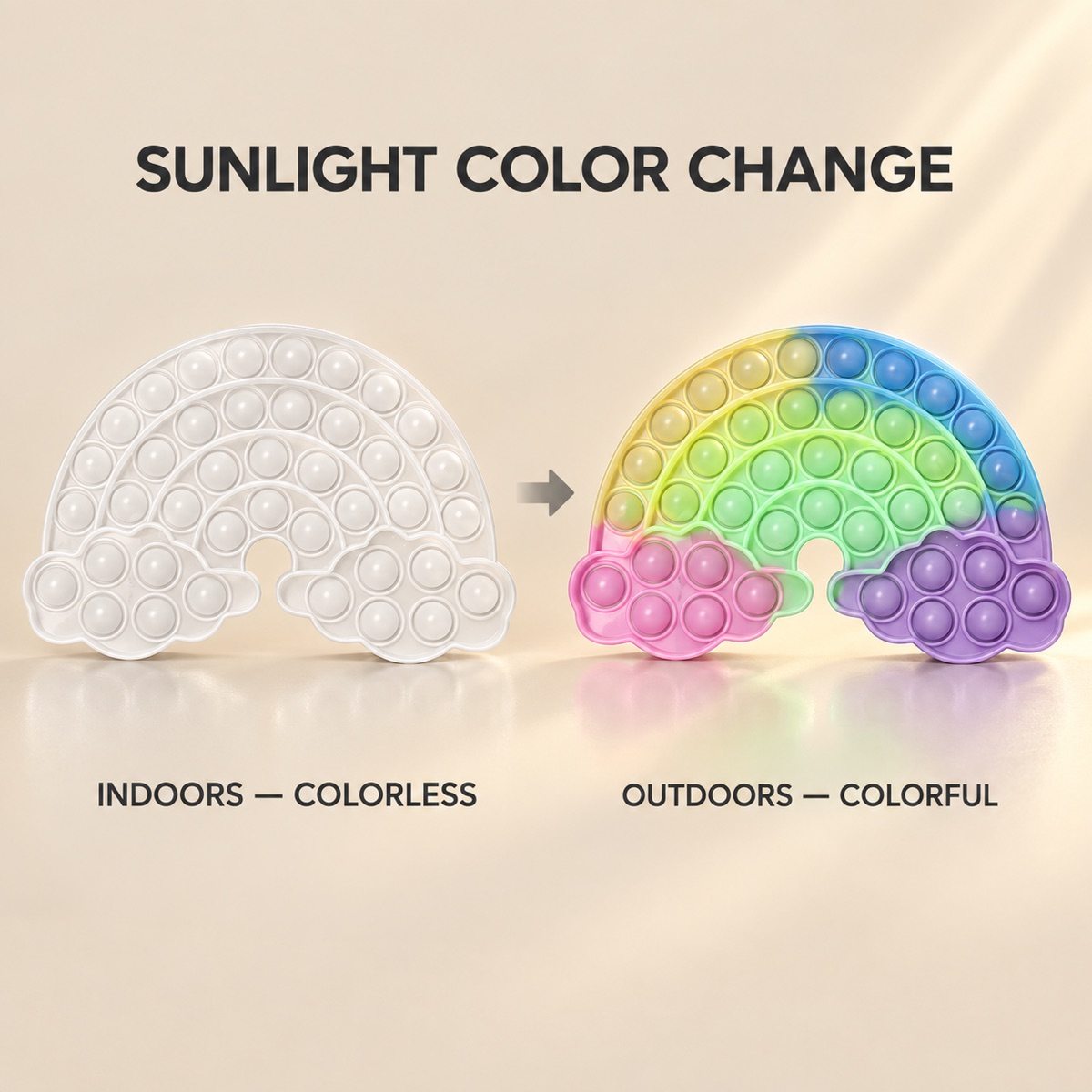
UV color-changing cups use photochromic materials that respond to ultraviolet radiation. Indoors or under low-UV lighting, the artwork may look pale or nearly colorless. Outdoors, the material absorbs UV energy and develops color. The color usually fades again after the cup returns indoors.
Best Applications
Children’s outdoor bottles, camping cups and sports drinkware.
Beach, travel, summer-event and outdoor brand promotions.
Designs that create a hidden-indoors and revealed-outdoors experience.
A playful visual demonstration of changing UV conditions.
The result depends on weather, season, latitude, window glass, light intensity and exposure time. A photochromic cup is not a calibrated UV meter and does not replace sun-safety advice.
6 Thermochromic vs Photochromic Cups
| Comparison | Thermochromic | UV photochromic |
|---|---|---|
| Primary trigger | A rise or fall in temperature | Sunlight or another UV-containing source |
| Indoor test | Use warm water, cold water or ice | The effect may be weak under ordinary indoor light |
| Outdoor behavior | Depends mainly on cup-wall temperature | Usually becomes stronger as UV exposure increases |
| Typical use | Hot-drink, cold-drink and temperature interaction | Outdoor products and sunlight interaction |
A Four-Step Identification Test
Record the original appearance at room temperature indoors.
Apply warm water or ice to a small area and observe any temperature response.
After the sample returns to room temperature, expose a different area to sunlight or the specified UV source.
Record the trigger, response time, color depth and recovery time, then compare the results with the approved supplier sample.
7 How to Choose the Right Color-Changing Cup
Start With the Use Case
Coffee and tea projects normally suit heat activation; iced beverages suit cold activation; outdoor and sunlight-interaction projects suit UV activation. If one product requires more than one response, confirm the compatibility of the functional layers during the design stage.
Confirm the Cup Material
Ceramic, PP, PE, PET, copolyester, stainless steel and glass differ in surface energy, heat resistance and processing requirements. The supplier must match the primer, ink, curing method and protective coat to the substrate. A system that performs well on one material should not be copied to another without testing.
Define the Trigger and Visual Result
Starting and final states: colored to colorless, colorless to colored or color to color.
Onset temperature, full-change temperature and allowed tolerance.
Time to reach a stable color and time to recover.
Target color, artwork position, coverage and acceptance sample.
Evaluate Durability
Ask the supplier to state hand-wash or machine-wash conditions and expected resistance to rubbing, warm water, detergent, alcohol and light aging. Tests should use the complete production structure, including primer, color-changing layer, conventional print and protective clear coat.
Approve a Physical Sample
Lighting, cup-wall color and coating thickness can materially change the result. Final approval should use a physical sample supported by before-and-after photographs, test temperature or light source, response time and an agreed color tolerance.
8 Are Color-Changing Cups Safe
Safety cannot be determined only from the name of the color-changing pigment. The complete finished cup must be evaluated. Functional inks and coatings are normally placed on the outside surface and separated from the drink and lip-contact area by design.
Confirm that the base cup material is suitable for the intended food-contact use.
Request compliance declarations and relevant test information for inks, coatings and clear coats.
Identify whether any decorated area could contact the beverage, cup rim or user’s lips.
Apply the food-contact and migration requirements of the target sales market.
For children’s products, add impact, scratch, small-parts and foreseeable-misuse assessments.
Terms such as “non-toxic,” “eco-friendly” and “food grade” do not replace product-level testing and compliance documentation. Stop using a cup if the decoration peels, cracks, becomes tacky or develops an unusual odor.
9 How Long Does the Color-Changing Effect Last
Service life depends on the material system, frequency of use and care. Repeated high heat, dishwasher cycles, hard abrasion, prolonged sunlight and aggressive cleaners can accelerate fading. Some cups are designed for regular reuse, while others are better suited to events or short promotional campaigns.
Care Tips
Hand-wash with a soft sponge and mild detergent.
Avoid steel wool, abrasive powders and strong solvent cleaners.
Do not use a dishwasher, microwave or oven unless the product is expressly marked as suitable.
Keep UV-activated products out of prolonged direct sunlight when not in use.
Use sleeves, dividers or individual bags during transport to reduce cup-to-cup abrasion.
10 Information to Send for a Quotation or Sample
Cup style, volume, dimensions and target quantity.
Cup material and whether food-contact use is required.
Heat, cold or UV activation.
Starting color, final color and artwork files.
Activation onset, full-change condition and allowed tolerance.
Logo position, print area, number of colors and surface gloss.
Required primer, conventional print or protective clear coat.
Washing method, use temperature, outdoor exposure and target service life.
Target market and required regulations or tests.
Packaging, lead time, sample quantity and acceptance criteria.
11 Frequently Asked Questions
Why do color-changing cups change color?
Thermochromic or photochromic materials on the cup alter their optical state when temperature or UV exposure changes, producing a visible color response.
At what temperature does a heat-sensitive cup change?
Some common systems show a clear response around 40–45°C, but formulations vary widely. Use the supplier’s technical data and an approved sample as the project specification.
How quickly does a cold cup change after ice water is added?
Many products begin changing within seconds, but the speed depends on liquid temperature, cup-wall thickness, coating structure and ambient conditions. Measure the required response time during sampling.
Will a UV color-changing cup work indoors?
The response may be weak under ordinary indoor lighting because UV intensity is low. It is usually clearer near a window, under a UV-containing source or outdoors.
Are color-changing cups dishwasher safe?
Only use a dishwasher when the manufacturer expressly permits it. Heat, aggressive detergent and spray abrasion can damage the functional coating, so hand-washing usually extends service life.
Can a thermochromic cup measure drink temperature accurately?
No. It provides an approximate visual response near its designed activation range and cannot replace a thermometer or a food-safety check.
What should be inspected on a custom color-changing cup?
At minimum, verify artwork and color, activation conditions, response and recovery time, adhesion, abrasion resistance, wash durability and compatibility with the final use environment.
12 Conclusion
Heat-activated cups fit hot-drink interaction, cold-activated cups fit iced beverages and events, and UV photochromic cups fit outdoor experiences. The pigment name alone does not determine performance. Cup material, activation range, artwork structure, protective coating, test method and real use conditions all matter.
For a custom project, send the cup style, material, quantity, target colors, trigger conditions and use environment before sampling. After approving the physical sample, include response time, durability and compliance requirements in the purchase order or quality agreement.
Quotation checklist: Send the cup style, material, quantity, artwork, trigger conditions and target market, then request a physical sample, test evidence and production acceptance criteria.
Website Publishing and Optimization Checklist
Add a clear author or technical reviewer and a visible last-updated date.
Use descriptive image filenames such as heat-color-changing-cup-before-after.jpg and write accurate alt text.
Link internally to cup categories, material guides, printing methods, case studies and the quotation page.
Use Article and BreadcrumbList structured data and keep the markup consistent with visible page content.
Keep the FAQ visible because it helps users, but do not promise an FAQ rich result in Google Search.
After publication, monitor impressions, clicks, queries and indexing in Google Search Console, then update the page using real search demand.
Custom Color Changing Cup Solutions from Wuxi Afshan Packaging Co Ltd
Wuxi Afshan Packaging Co., Ltd. supports custom color-changing cup and drinkware projects for international buyers. Our customization scope can include cup material selection, heat-, cold- or UV-activated effects, artwork placement, color matching, screen printing, surface finishes, protective coatings, labeling and packaging coordination. The final construction is confirmed through an approved physical sample and project-specific performance requirements.
For an efficient quotation, share the intended beverage, activation condition, cup material, artwork, target colors, finish, order quantity, care expectations, target market and required tests. Wuxi Afshan Packaging Co., Ltd. can then align the sampling plan and acceptance criteria with the intended use.
Image note: Images were taken from the user-supplied source material and are included only as process illustrations. Final color, activation range, response speed and durability must be confirmed with approved samples and production testing.